
Project Background
In finance today, Real World Assets (RWAs) are changing how we invest by linking value to things like real estate and art. They offer stability when markets get shaky, making them a safe choice for investors. RWAs blend old-school and new-school finance, giving people a reliable option to grow their money.
TAAS (Tokenization as a Service) started as a project for an hackathon, and then evolved to a viable product of its own.
There’s been a lot of talk around tokenizing real-world assets on the blockchain so the team thought, “Why don’t we build a product that helps people tokenize their assets?” Hence, “Tokenization as a Service.”
Overview
TAAS -(Tokenization-as-a-Service) is a cutting-edge SaaS platform that addresses the challenges of building scalable and secure asset tokenization software.
My Roles & Responsibilities
As the sole UI/UX Designer for this project, I was in charge of:
Converting the userflow jointly created by the team on Figjam, to visual screens.
Creating the mood board, style guide, and wireframes.
Designing high-fidelity wireframes, and a prototype.
The Key Problem
How might we simplify the creation of tokens for real-world assets to achieve top-notch security and easy token & asset management capabilities?
Why we chose to address this problem:
Real-world asset tokenization refers to the process of converting physical or tangible assets, such as real estate properties, blue bonds, green bonds, or commodities, into digital tokens that can be traded and transferred on a blockchain network. This innovative approach enables the fractional ownership and transferability of traditionally illiquid assets.
By tokenizing assets, their value can be divided into smaller units, allowing a larger pool of investors to participate in their ownership. This approach opens the door to a lot of possibilities, making it easier for people to trade their assets without any hassle.
The Solution
TAAS leverages the inherent value of Real World Assets (RWAs) and takes it a step further by bringing these assets onto the blockchain. This not only enhances liquidity but also opens doors to a wider pool of investors, democratizing access to opportunities that were once reserved for a select few.
TAAS simplifies creating tokens for real-world assets, offering top-notch security to protect user data & transactions from unauthorized access, manipulation or theft, and easy token and asset management capabilities. Some features include:- Easy API integration, token and asset security, easy team and asset management, among others.
Key Features of TAAS
Global Accessibility: TAAS breaks down geographical barriers, allowing investors worldwide to participate in the ownership of real-world assets.
Security and Transparency: Blockchain technology ensures the highest level of security and transparency in asset transactions, fostering trust among investors.
Liquidity Enhancement: By fractionalizing assets into tokens, TAAS facilitates secondary market trading, providing investors with increased liquidity.
Diversification Opportunities: Investors can diversify their portfolios by gaining exposure to a wide range of real-world assets, from real estate to fine art.
Now, let’s dive into the main designs.
Originally, we decided to use a dark background for TAAS, because we thought it would work better for our target audience; Web3 folks. This led us to the following designs:

New Designs
Landing Page

Key Features & IA Workflow
Snapshots of the main screens & information architecture.
Main Dashboard
We made the main dashboard really simple, choosing to showcase only the most important features; the total assets the user has on the platform, value of these assets, and a table showing recent activity on the site.

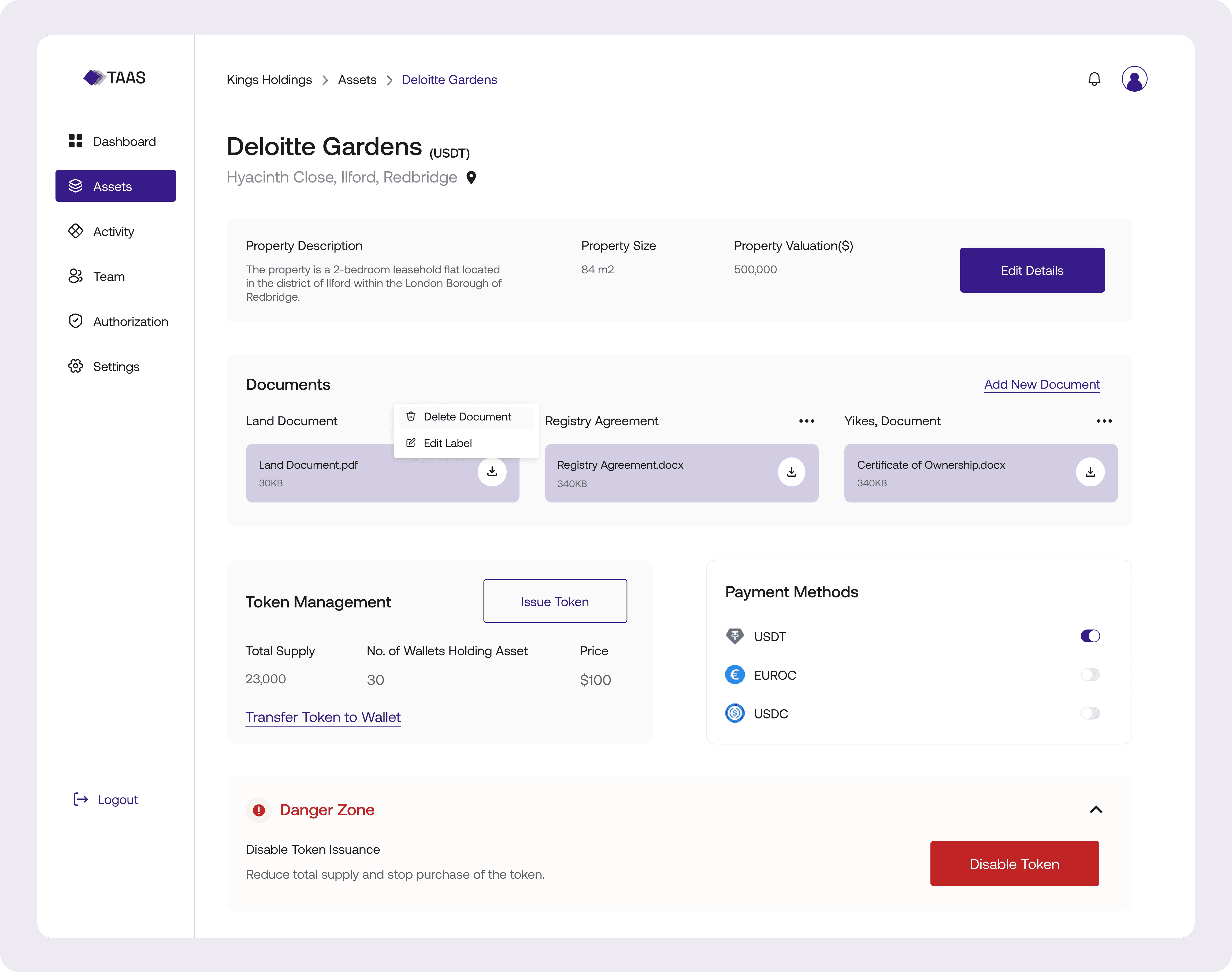
Asset Page
The asset page shows a list of assets created on the particular project, which can be opened to see main details of each particular asset. Also, the asset page contains the CTA for tokenizing new assets.

Asset Management
The asset management page highlights details about the particular, sectioning them into Property Information, Documents, and Token Information.
A danger zone lies below, for destructive actions like deleting the asset.
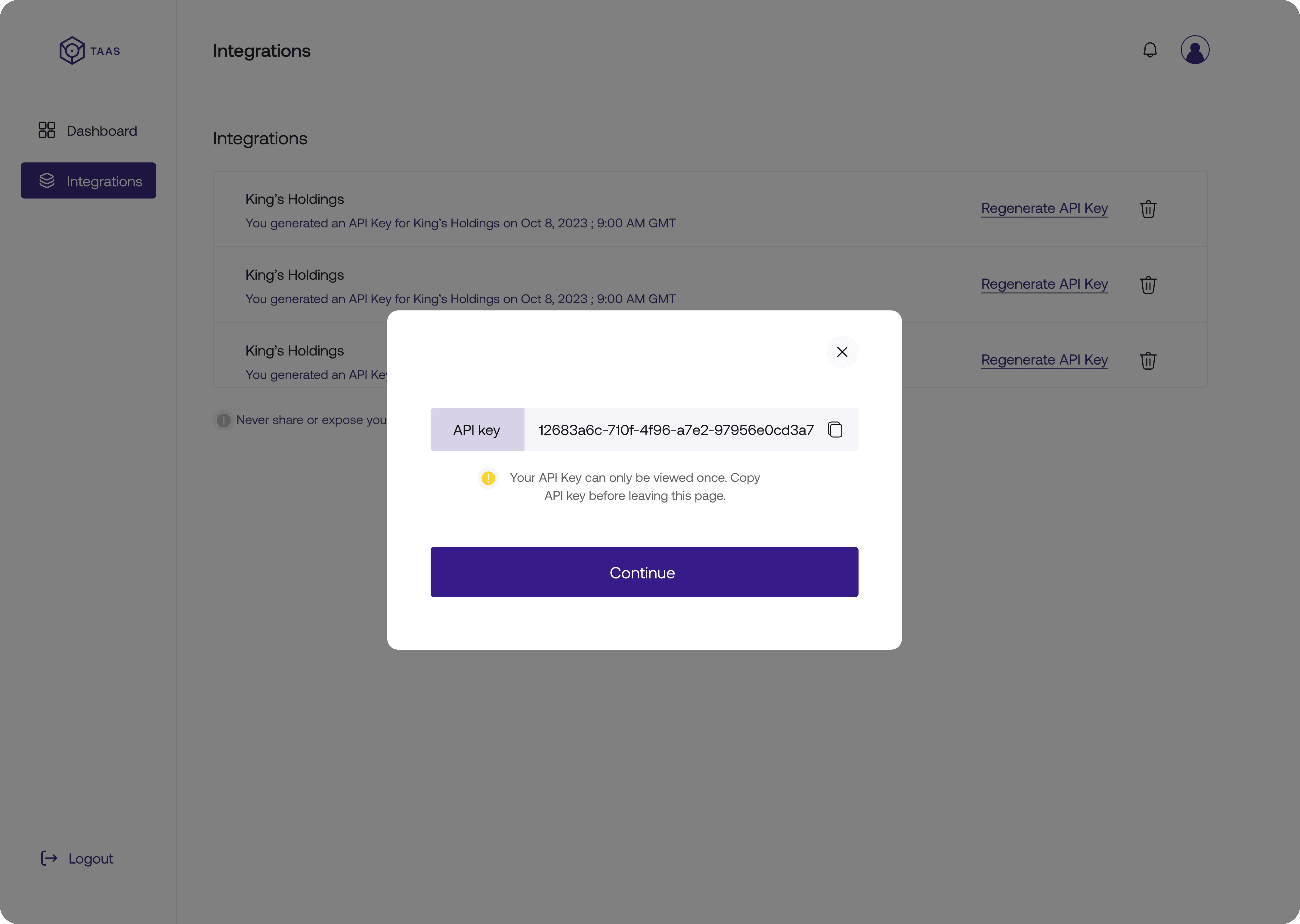
API Integration
APIs can be integrated into the platform, enabling users create API keys.
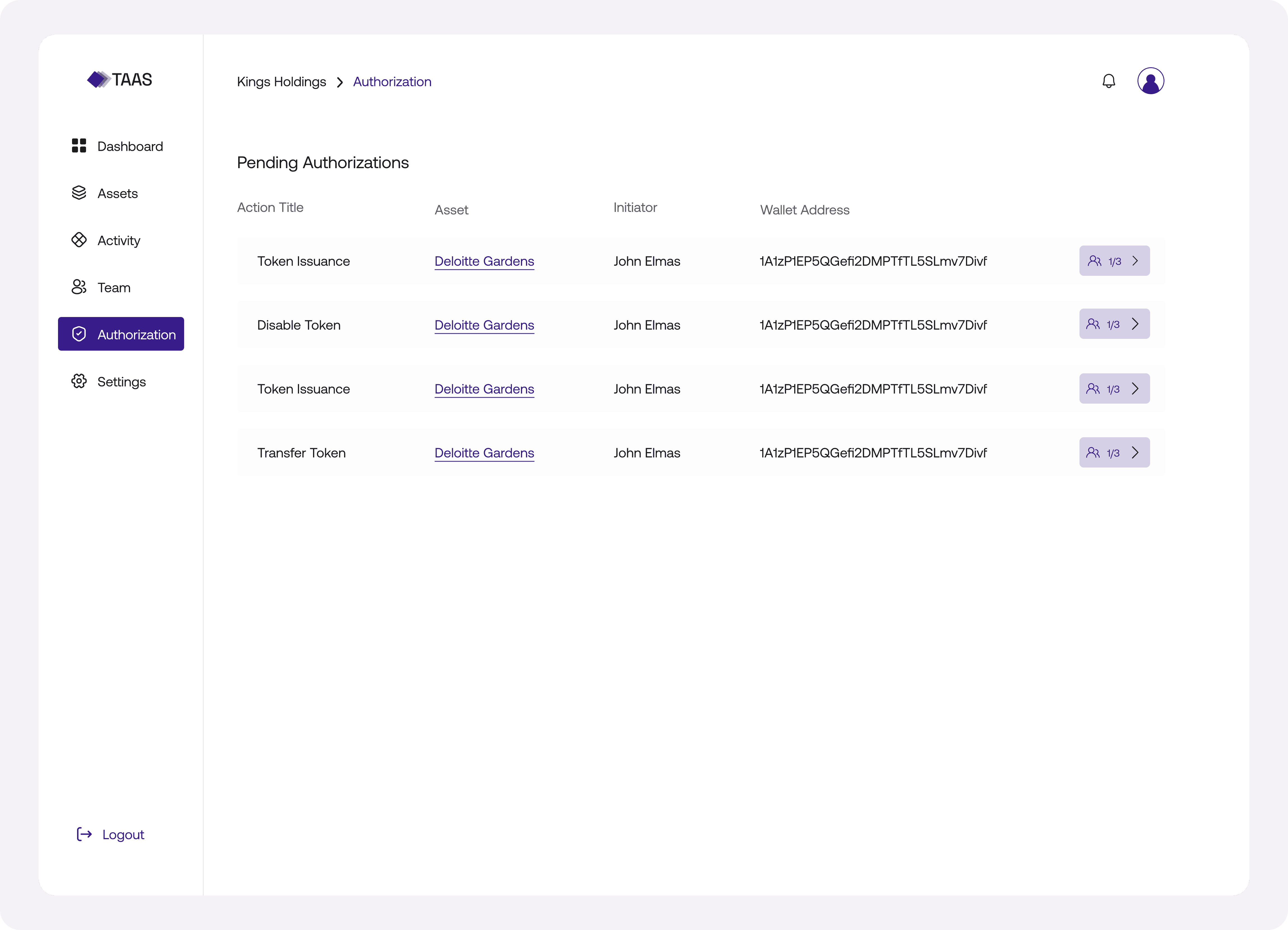
Authorization
This section basically handles authorization for important actions on the asset, making sure all team members are aware and consent to the actions being taken e.g token issuance. This reduces the issue of unauthorized access or manipulation.
Onboarding
Although TAAS was built on the blockchain, we used the traditional onboarding methods, to simplify the onboarding process for potential users. On TAAS, users are encouraged to sign up using their email address.

Style Guide
Working on TAAS, I tried to prioritize ease and functionality, and the visual language communicates that.

My Takeaways
When I was first asked to work on TAAS, I was nervous because I didn’t know much about Web3 and I didn’t particularly understand the concept. At the same time, I was thrilled because this was a chance to learn more about Web3, a concept I’m trying to know more about.
With a lot of help from other members of the team who are more familiar and experienced in Web3 that I am, we were able to pull this off, and create an authentical solution. I definitely couldn’t have done this without teamwork, collaboration, and lots of reading.